
Choosing a reliable Titanium Hemispheric Bolt manufacturer requires more than comparing catalog prices. In 2026, buyers should examine material certificates, machining control, surface quality, and documented inspection procedures. A hemispheric head must remain smooth and consistent. Small defects can affect seating, load distribution, and long-term assembly performance. This matters in aerospace, marine, medical, chemical, and high-performance industrial applications.
Dr. Matthew J. Donachie, author of Titanium: A Technical Guide, stated, “Titanium’s value lies in its combination of strength, light weight, and corrosion resistance.” His observation remains useful when evaluating bolt suppliers. Titanium offers excellent strength-to-weight performance, but it is not effortless to manufacture. Poor tooling can create burrs, thread damage, or excessive heat. Skilled manufacturers control cutting speed, lubrication, cleaning, and final inspection.
This guide reviews the 2026 best Titanium Hemispheric Bolt manufacturers through practical criteria. These include titanium grade selection, dimensional accuracy, custom production capacity, testing, traceability, and delivery consistency. Look for suppliers that can provide mill certificates, inspection reports, and clear tolerance data. Ask how they inspect the curved head and threaded section. Do not rely on polished photographs alone.
A low quote may look attractive. It may also conceal weak documentation or inconsistent batches. No ranking is perfect. Application requirements differ, and supplier claims require verification. The strongest manufacturers combine engineering experience with repeatable production. They communicate clearly when a design needs adjustment. That honesty is valuable. Sometimes, the best supplier is not the largest one, but the one that notices a small problem before it reaches your assembly line.
2026 Best Titanium Hemispheric Bolt Manufacturers
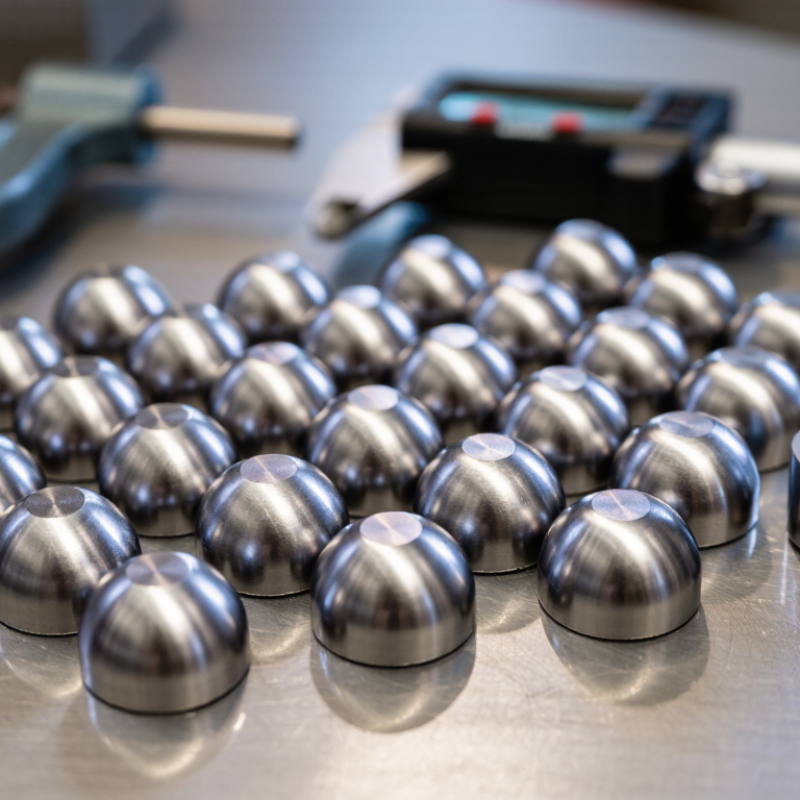
A titanium hemispheric bolt has a rounded, dome-shaped head and a threaded shank. The smooth head reduces sharp edges and helps prevent snagging. It also creates a clean appearance on exposed panels. Most versions use commercially pure titanium or Grade 5 titanium alloy. Grade 5 offers higher strength, while pure titanium provides excellent corrosion resistance. That distinction matters.
These bolts are used in aircraft fairings, marine hardware, racing components, medical equipment, and chemical-processing assemblies. Saltwater is a major reason for selecting titanium. The material resists chloride attack better than many common steels. The USGS Mineral Commodity Summaries 2025 reported roughly 9 million metric tons of global ilmenite production in 2023. This large mineral supply supports titanium production, but it does not guarantee consistent fastener quality.
For critical assemblies, buyers should check ASTM F467 or ASTM F468 compliance, alloy certification, thread accuracy, and surface defects. Torque values also need attention. Titanium can gall during installation, especially with dry threads. A suitable lubricant and controlled tightening process are practical safeguards. Head shape alone does not prove performance. Some hemispheric bolts are decorative, while others require tested fatigue strength. That assumption is incomplete. Manufacturers should provide batch traceability, dimensional inspection records, and corrosion-test evidence. I would also verify the mating material, because titanium joined directly with certain metals may create galvanic corrosion.
Titanium hemispheric bolts are fasteners with a rounded head that can reduce snagging and provide a smooth external profile. They are commonly selected for aerospace structures, marine equipment, chemical-processing systems, sporting products, and medical devices where low density, corrosion resistance, and high strength-to-weight performance are important.
The chart compares the minimum specified tensile strength of widely used commercially pure and alloyed titanium grades. Values are shown in MPa and are based on commonly specified ASTM material requirements; actual bolt strength depends on product form, heat treatment, diameter, and applicable fastener standards.
Evaluating titanium hemispheric bolt manufacturers in 2026 requires more than comparing prices. Check whether the supplier understands titanium grades, thread accuracy, and hemispheric head geometry. A reliable manufacturer should provide material certificates, heat-lot traceability, and dimensional reports for every production batch. Ask for tensile, hardness, and corrosion test data. Missing records matter.
Inspect how the factory controls machining. Titanium can overheat during cutting, causing surface damage or unstable threads. Look for controlled tools, suitable cutting parameters, and documented inspection points. Coordinate measuring machines should verify head radius, shank diameter, and thread pitch. Request sample bolts before signing a large order. Measure them yourself.
Experience appears in small details. Does the engineering team question unclear drawings? Can it explain tolerance changes after heat treatment? A useful supplier will discuss installation torque and washer compatibility, not simply promise fast delivery. Audit photographs help, but they are not enough. An on-site or independent inspection is stronger evidence. I once treated a clean certificate as complete proof; that was too optimistic. Production capacity can also be overstated during busy seasons. Ask for recent delivery records, rejection rates, corrective-action reports, and actual lead times. The best evaluation combines documents, samples, factory evidence, and uncomfortable questions.
Titanium hemispheric bolt manufacturing depends on controlled forming, accurate machining, and documented inspection. A 2024 Grand View Research report estimated the global titanium market at about USD 27 billion in 2023, with steady growth ahead. That demand increases pressure on manufacturers to prove consistency, not only produce attractive hardware.
Reliable production starts with certified titanium bar or billet, supported by chemical analysis and full heat-lot traceability. Hot forging can create the hemispheric head, while CNC machining refines the seating surface and thread geometry. Titanium generates heat during cutting, so tool wear and cutting speed require close monitoring. Thread rolling may improve fatigue resistance, but it needs suitable material condition and carefully controlled force. ASTM F468 and applicable aerospace specifications can guide dimensional, mechanical, and material requirements. Inspection should include thread gauges, hardness checks, visual examination, and sampling for tensile performance. Surface defects can hide beneath a polished finish.
Tips: Ask for mill certificates, process-flow records, and calibration dates. Confirm whether inspection covers the head radius, thread runout, and coating thickness. A 2023 ASTM committee discussion noted that titanium fastener performance depends strongly on testing conditions and specimen preparation. This is easy to underestimate. Manufacturers should also review nonconforming parts honestly; repeated minor burrs may indicate unstable tooling, not bad luck. Reference samples, digital inspection records, and independent verification add useful confidence.
2026 Best Titanium Hemispheric Bolt Manufacturers
Leading titanium hemispheric bolt manufacturers serve aerospace, medical, marine, energy, and precision equipment applications. Each sector demands different performance details. Aerospace buyers often require lightweight strength, fatigue resistance, and complete material traceability. Medical equipment may need clean surfaces, controlled finishes, and documented biocompatibility considerations. Marine systems usually prioritize corrosion resistance and stable performance in saltwater environments.
Reliable manufacturers should demonstrate strong process control. Look for certified titanium grades, accurate hemispheric forming, consistent thread dimensions, and batch-level inspection records. Useful evidence includes chemical analysis, tensile testing, hardness results, and dimensional reports. Manufacturers following recognized ASTM or ISO requirements offer a stronger basis for technical decisions. Still, certificates alone are not enough. Poor packaging can damage threads before installation.
Tips: Confirm the required titanium grade before requesting quotations. Send drawings with diameter, thread type, tolerance, surface finish, and service temperature. Ask whether samples receive the same production treatment as larger orders. Also review nonconformance procedures and replacement policies. Small details matter.
Application conditions should guide the final selection. A bolt exposed to vibration may need special thread control or locking support. A component near dissimilar metals may require galvanic corrosion evaluation. Some suppliers communicate clearly, while others provide impressive documents but vague answers. That difference deserves attention. The best choice is not always the lowest-cost manufacturer. It is the supplier that can repeatedly match engineering requirements, inspection needs, and delivery expectations.
| Manufacturer Capability Profile | Primary Titanium Grades | Applicable Standards | Typical Size Range | Manufacturing Capability | Quality and Inspection Controls | Best-Fit Applications |
|---|---|---|---|---|---|---|
| Profile A Precision CNC Manufacturer | Grade 5 Ti-6Al-4V ELI | ASTM F467 ASTM F468 ASTM F136 | M3–M20 1/4–3/4 in. | CNC turning and milling of hemispheric heads; internal and external thread production; custom head diameter, shank length, and drive features. | Dimensional inspection, thread gauging, material-certification review, visual inspection, and optional coordinate-measuring-machine verification. | Aerospace brackets, lightweight structural assemblies, robotics, motorsport, and high-performance equipment. |
| Profile B Medical-Fastener Manufacturer | Commercially Pure Titanium Grade 5 ELI | ASTM F67 ASTM F136 ISO 5832-2 ISO 5832-3 | Approximately 2–12 mm diameter Custom surgical lengths | Small-diameter precision machining, controlled deburring, rounded-head finishing, and surface treatment suitable for medical-device production. | Lot traceability, surface-finish inspection, dimensional verification, cleaning validation, and documented material certificates. | Orthopedic instruments, maxillofacial fixation systems, dental equipment, and non-implant medical assemblies. |
| Profile C Industrial Production Manufacturer | Grade 2 Grade 5 | ASTM B348 ASTM F467 ASTM F468 | M4–M30 3/16–1 1/4 in. | CNC machining and repeat-production processing for hemispheric socket-head or dome-head configurations; standard and custom thread forms. | Calibrated gauges, sampling inspection, tensile-property documentation when specified, and lot-based traceability. | Chemical-processing equipment, marine hardware, heat exchangers, pumps, valves, and general corrosion-resistant assemblies. |
| Profile D High-Temperature and Corrosion-Service Manufacturer | Grade 5 Grade 7 Grade 12 | ASTM B348 ASTM F467 ASME material specifications where applicable | M6–M24 1/4–1 in. | Machining from certified titanium bar or billet, controlled thread geometry, optional anti-galling treatment, and application-specific head radii. | Chemical-composition verification, dimensional checks, thread inspection, surface examination, and review of heat or lot records. | Desalination systems, offshore equipment, chlor-alkali service, chemical plants, and marine assemblies. |
| Profile E Lightweight Transportation Manufacturer | Grade 5 Grade 5 ELI | ASTM F467 ASTM F468 AMS specifications when contractually required | M4–M16 1/4–5/8 in. | High-strength, weight-reduced hemispheric bolt designs with controlled head-to-shank transition and optional locking or safety-wire features. | First-article inspection, thread and head-profile measurement, hardness testing when specified, and full batch documentation. | Aircraft interiors, electric vehicles, racing vehicles, bicycles, and lightweight transport structures. |
| Profile F Custom and Low-Volume Manufacturer | Grade 2 Grade 5 Grade 9 | ASTM B348 ASTM F467 Customer drawings and purchase specifications | Approximately M2–M36 Drawing-based dimensions | Prototype and low-volume machining, reverse engineering from drawings, special head profiles, unusual thread pitches, and short-run production. | Drawing compliance review, prototype approval, dimensional reports, thread plug and ring gauging, and material-certificate verification. | Research equipment, laboratory systems, custom machinery, product development, and replacement parts. |
| Selection should be based on the required titanium grade, thread specification, temperature and corrosion environment, mechanical-load requirements, surface finish, inspection plan, and applicable customer or regulatory standards. Actual availability and dimensional limits depend on the approved engineering drawing and purchase specification. | ||||||
Selecting a titanium hemispheric bolt supplier requires more than comparing prices. Start with the bolt’s grade, diameter, thread standard, head radius, and required tensile strength. Confirm these details against your assembly drawings. Small dimensional errors can create uneven contact or damaged threads. Measure twice.
Ask each supplier for material certificates, batch traceability, and inspection records. Reliable documentation should identify the titanium grade, melting source, heat treatment, and test results. For demanding applications, request dimensional reports and sample bolts before placing a large order. A polished sample can still hide inconsistent threads.
Review the supplier’s manufacturing experience with titanium, not only stainless steel or aluminum. Titanium needs controlled machining, suitable tooling, and careful surface protection. Ask how they prevent galling during installation. Request information about packaging, storage, and contamination control. These details often affect field performance.
Communication also reveals supplier reliability. Technical staff should answer clearly and admit limitations when specifications are uncertain. I have seen projects delayed because a supplier accepted an unclear drawing without asking questions. That should concern you. Compare lead times, minimum quantities, inspection costs, and replacement procedures in writing. A lower quote may exclude testing or custom tooling. Select the supplier that can prove consistent quality, explain production risks, and support your project after delivery.
