
Choosing the right Pneumatic Valves in 2026 requires more than matching port size and operating pressure. A valve may fit the drawing yet fail beside a dusty actuator, wet air line, or rapidly cycling cylinder. Selection must connect machine duty, air quality, response time, safety, maintenance, and total ownership cost.
Industry data shows why this decision matters. The International Federation of Robotics reported 541,302 industrial robots installed worldwide in 2023 in its World Robotics 2024 report. More automated equipment means more directional, proportional, and flow-control valves working under demanding cycles. The U.S. Department of Energy also notes that compressed-air systems can lose 20% to 30% of their output through leaks and inefficient practices. A poorly specified valve can increase that waste through excessive pressure drop, leakage, or unnecessary oversizing.
Small details matter.
This guide will compare solenoid, mechanical, pneumatic, proportional, and process-control options for real operating conditions. It will examine pressure range, flow coefficient, response speed, voltage, ingress protection, seal compatibility, and expected cycle life. ISO 8573-1 air-quality classes will provide a practical reference for filtration and moisture control. Market forecasts from firms such as MarketsandMarkets suggest continued growth in industrial pneumatic components, but forecasts are not guarantees. They can simplify complex purchasing decisions.
Engineers should verify every recommendation against manufacturer test data, installation conditions, and applicable standards. A valve that performs well in a catalog may behave differently after months of contamination or voltage variation. That uncomfortable gap deserves attention. The best choice is not always the cheapest valve, the fastest valve, or the most advanced one. It is the valve that delivers reliable control, measurable efficiency, and manageable maintenance in the actual machine.
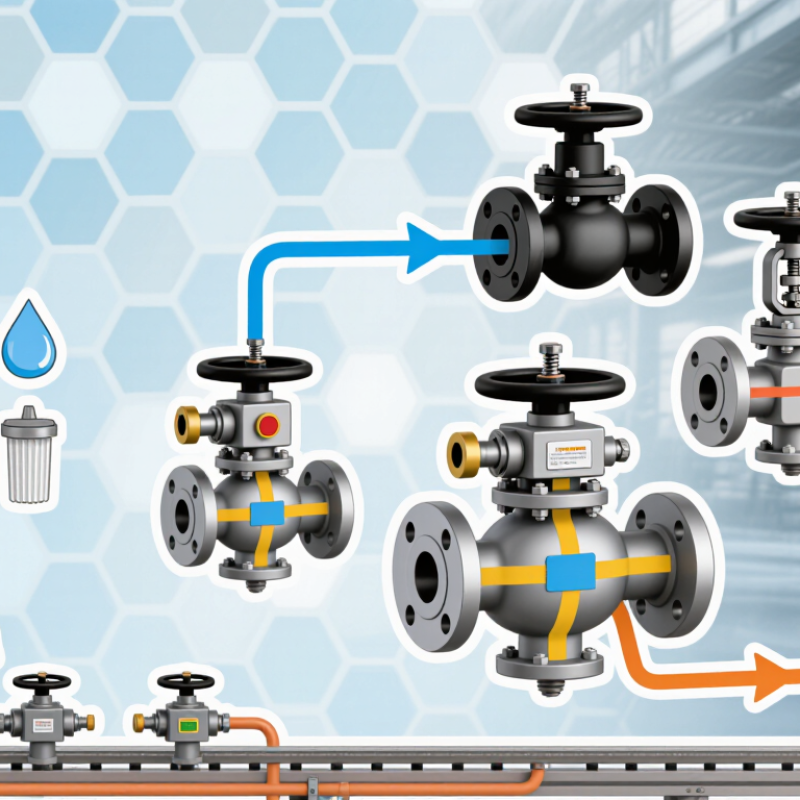
Choosing pneumatic valves in 2026 starts with a realistic air-demand estimate. A valve rated for 6–7 bar supply may still perform poorly when flow peaks. Measure actuator consumption during the fastest cycle, not only the average cycle. Record pressure at the valve inlet, then compare it with the machine’s farthest actuator. Small restrictions matter.
Use required flow, response time, and acceptable pressure drop to size the valve. Many engineers begin with port size, but port diameter alone does not reveal capacity. Check the flow coefficient or standardized flow rating at your working pressure. Include exhaust flow when rapid retraction matters. A 7 bar header can fall below 6 bar after filters, long tubing, or simultaneous movements. I have seen a compact valve pass a bench test yet hesitate on a crowded production line. That result deserves investigation, not excuses.
Selecting the interface standard is a practical decision, not a paperwork exercise. ISO 5599-1 typically supports larger, subbase-mounted pneumatic valves. Its generous port spacing helps maintenance teams reach fittings with ordinary tools. ISO 15407 targets more compact valve assemblies, often using 18 mm or 26 mm mounting widths. This can reduce manifold space in machines with crowded control cabinets. Check the required flow rate before choosing the smaller format.
The mounting patterns are different. They should not be treated as interchangeable, even when both systems control similar cylinders. ISO 5599-1 may suit high-flow actuators, harsh production areas, and installations needing robust subbases. ISO 15407 can fit compact automation stations where every millimeter matters. In field inspections, mismatched bolt patterns and port locations are common sources of delayed commissioning. Measure the valve envelope, screw positions, pilot connections, and exhaust direction.
Do not select by size alone. Confirm the latest standard edition, working pressure, temperature range, response time, and manifold spacing. Review the machine’s existing interface before changing valve families. A small valve may look efficient but create excessive pressure loss. That mistake is easy to miss. I would also request dimensional drawings and a sample mounting check before ordering a full set. Standards improve compatibility, but they do not remove the need for verification.
Cv is useful, but it is not a complete performance answer. Under identical pressure conditions, a valve rated at Cv 2.0 can pass roughly 67% more flow than one rated at Cv 1.2. However, published values may use different test standards. ISO 6358-1 measures sonic conductance and critical pressure ratio, while Cv data often follows other procedures. Ask for the test medium, inlet pressure, temperature, and outlet pressure before comparing numbers. A neat spreadsheet can still mislead.
Response time needs the same discipline. A catalog may state 20 milliseconds, yet the machine may respond slower after long tubing, restrictive fittings, or a weak pilot signal. Measure both energizing and exhaust times at the real operating pressure.
The U.S. Department of Energy’s Improving Compressed Air System Performance sourcebook reports that leaks can waste 20–30% of compressed-air output in poorly maintained systems. That wasted capacity can make a fast valve appear disappointingly slow.
A 10⁶-cycle rating sounds reassuring. It is not a guarantee. Check whether the test used dry air, rated pressure, continuous switching, and the intended seal material. ISO 6358-1 provides standardized airflow testing, but it does not replace endurance validation. Request cycle-test records, failure criteria, and pressure-decay results. One overlooked detail matters: a valve surviving one million cycles in a laboratory may face contamination, heat, and shock in production. Leave a practical margin, not just a numerical one.
Air quality should guide valve selection, not only pressure and flow. ISO 8573-1:2010 classifies compressed air by particles, water, and oil. For precision valves, confirm the required class before ordering. Class 1 limits oil to 0.01 mg/m³ and pressure dew point to -70°C. These figures matter in cold rooms, clean processes, and high-cycle actuators. A lower class is not automatically safer. The application decides the target.
Explosion risk requires a separate check. ATEX Directive 2014/34/EU covers equipment, while Directive 1999/92/EC addresses workplace protection. Match the valve, solenoid, enclosure, and temperature class to the documented zone. Gas and dust risks need different evaluations. The U.S. Department of Energy’s Compressed Air Sourcebook reports that leaks can waste 20–30% of compressor output. Poor air preparation can increase leakage, sticking, and unplanned maintenance. That cost is easy to underestimate.
Tips: Request a current air-quality test, not an old certificate. Specify ISO 8573-1 classes in the purchase document. Verify zone classification with a competent safety professional. Check exhaust noise, grounding, and material compatibility. Test valves after installation under real temperature and load. One practical warning remains: selecting ATEX-rated equipment alone does not make the entire installation compliant. The system design still needs review, records, and honest maintenance checks.
Calculate lifecycle cost before comparing purchase prices. A low-cost pneumatic valve may waste energy through continuous leakage. Measure supply pressure, operating cycles, and compressor output during normal production. Record readings at the valve inlet and outlet. Pressure loss can reveal undersized passages, clogged silencers, or poor fittings.
Leakage testing needs practical discipline. Shut down connected equipment, isolate the circuit, and monitor pressure decay for a fixed period. Use the same test duration every time. Small leaks often sound harmless but accumulate over thousands of operating hours. I once accepted a supplier’s “minimal leakage” figure without checking installation conditions. My estimate was too optimistic.
Energy use depends on more than air consumption. Calculate the flow required per cycle, multiply it by daily cycles, and include compressor efficiency. Then add maintenance labor, replacement intervals, downtime risk, and disposal costs. A spreadsheet helps, but it can hide weak assumptions. Check measurements against production logs and repeat unusual readings. Choose a valve that maintains stable pressure under peak demand, not only during a clean bench test. Document temperature, pressure, cycle frequency, and test equipment accuracy. Leave room for uncertainty. Real factories are rarely perfect.
